

The Technical SEO Checklist That Actually Moves Rankings for SaaS Sites
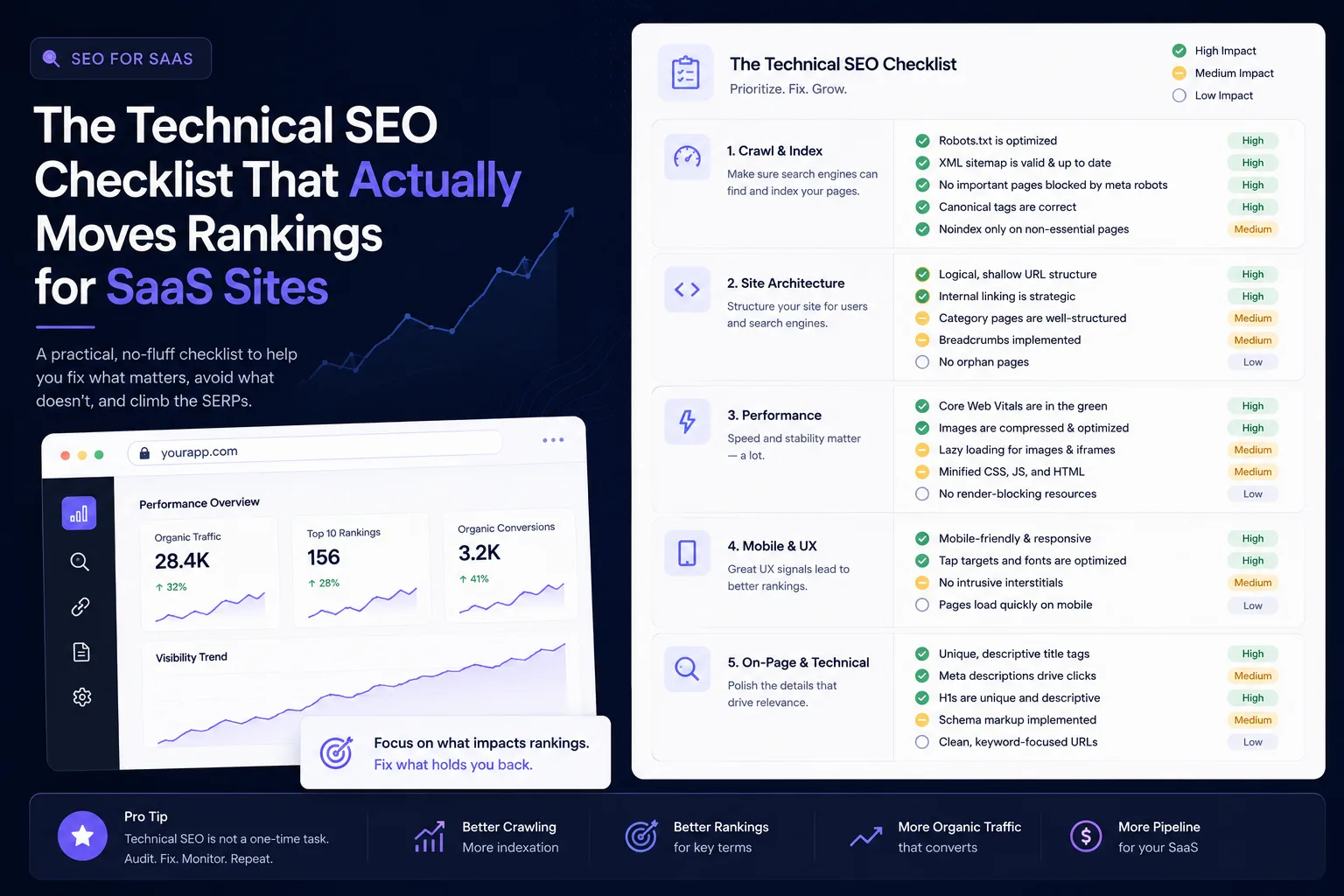
Content strategy gets all the attention, but on nearly every SaaS site we audit, the bigger wins are sitting in technical debt nobody's looked at since launch. This is the checklist our SEO & digital marketing team runs first, in the order it actually pays off.
1. Fix the render-blocking basics
SaaS marketing sites are often built by the product engineering team, who optimize for developer experience, not page speed. Unused JavaScript bundles shipped on the homepage, render-blocking web fonts, and unoptimized hero images are the most common issues we find — and they're the fastest to fix.
2. Get canonical tags right
We regularly find SaaS sites serving duplicate content on /pricing and /pricing/, or on marketing pages generated per-campaign with near-identical content and no canonical pointing back to the primary page. Search engines split ranking signal across duplicates instead of consolidating it onto one URL.
3. Audit your sitemap against what's actually indexed
A stale sitemap.xml that still lists pages removed eighteen months ago sends a quiet signal that your site isn't well maintained. Compare your sitemap against Google Search Console's indexed-pages report quarterly — mismatches in either direction (missing pages, orphaned dead pages) point to a process gap worth fixing.
4. Structured data on every page type that supports it
Organization schema sitewide, SoftwareApplication or Product schema on pricing pages, FAQPage schema anywhere you already have an FAQ accordion, Article schema on blog posts. This doesn't guarantee rich results, but it removes ambiguity for crawlers — and rich results, when they do show, meaningfully lift click-through rate.
5. Internal linking that isn't just the nav
Nav links carry some weight, but contextual in-content links between related service pages, blog posts, and case studies are what actually distribute authority through the site. We require every service page to link to at least two related case studies and one relevant blog post — enforced as a checklist item, not an afterthought.
6. Core Web Vitals, measured on real devices
Lab data from Lighthouse is a starting point, not the answer. Field data from Chrome UX Report tells you what your actual visitors experience, and it's frequently worse than lab scores suggest — especially on mid-range Android devices, which SaaS teams testing on M-series MacBooks rarely account for.
What we don't put first
Keyword density, meta description length tweaks, and most on-page "SEO scores" from browser plugins. These aren't wrong to check, but they move rankings marginally compared to the six items above. If your technical foundation is solid, content strategy is where the remaining gains live — but fixing the foundation first is what makes that content strategy actually pay off.
SEO & Digital Marketing
Technical SEO and campaigns that turn traffic into pipeline.
Learn more →More from the blog.
Get insights delivered monthly.
One email a month — no fluff, just what we're learning from building software for clients.